The murky origins of the BBC – Part 3

This series of posts covering the topic of the unsavoury origins of the BBC is re-posted by kind permission of The Occidental Observer, where the original article can be found in full at this link.
The third of four parts of this series covering the murky origins of the British Broadcasting Corporation (BBC).

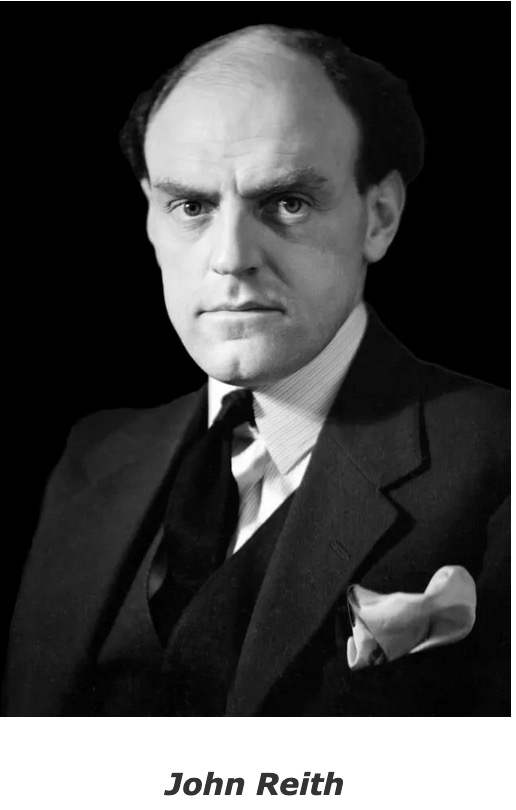
John Reith

Isaacs’ importance in the founding of the BBC only began to be publicised after the meeting transcripts emerged in 2018. Until then, historians appear to have universally attributed its creation and its ethos to the Post Office and then to John Reith, the company’s first general manager. 49 Reith’s appointment was, in fact, a further manifestation of the power of the patent-rich ‘first group’ at the May meeting: Marconi led by Isaacs, GEC led by Hirsch and British Thomson-Houston acting for the American Morgan-controlled General Electric, part-owner and partner of David Sarnoff’s RCA. Contrary to myth (and the BBC’s own website), it was Sarnoff, not Reith, who first declared that the mission of public broadcasters was to “inform, educate and entertain”.

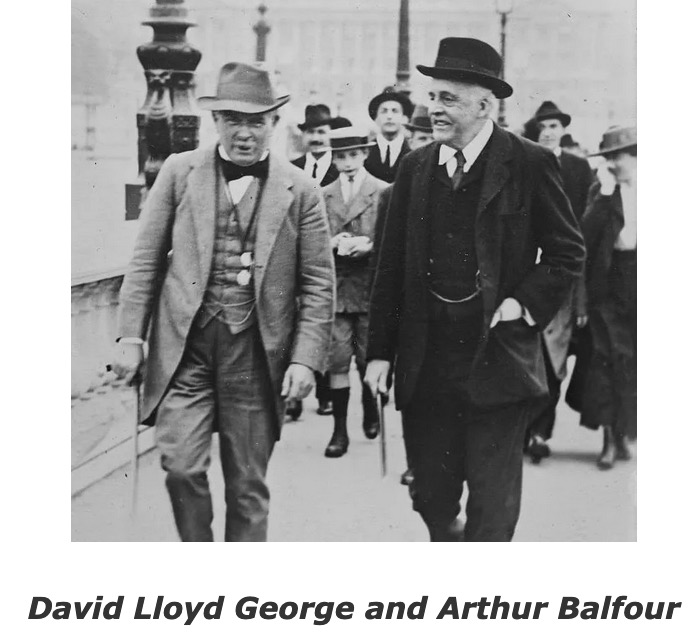
Reith, responding to an advertisement, applied to become general manager of the new Company (the British Broadcasting Corporation came later) in October 1922, with the Company due to begin operating at the start of 1923. Though he appears to have had little involvement in politics before this time, he had spent some of the previous months as an aide-de-camp to William Bull MP, a Tory supporter of Austen Chamberlain (brother of Neville and son of Joseph), who was, at that time, working for a continuation of the existing coalition government under David Lloyd George, Liberal Prime Minister since 1916. Between applying for the BBC job and being interviewed, Reith was introduced privately to Lloyd George. 50 The coalition lost power in the election of November.

Reith appears to have been chosen for the job before his interview in December. According to Asa Briggs:

“… unfortunately there are no surviving records in the BBC archives or elsewhere of what was happening behind the scenes. There is not even a surviving short list of the six people seriously considered for what was to be a strategic post in British twentieth-century history.”

Kellaway was said to have been considered but “moved instead after the Coalition Government’s defeat to the more lucrative post of Managing Director of the Marconi Company.” 51 When Isaacs died in 1925, Kellaway replaced him as Marconi’s member of the BBC board.

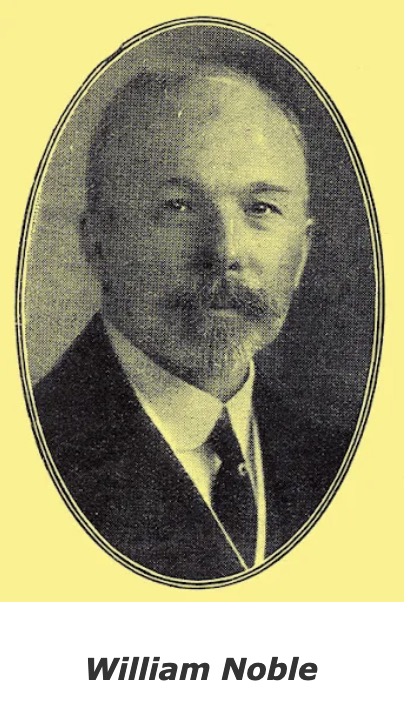
Reith was interviewed by his former employer, William Bull MP, who was a director of the British branch of Siemens, and William Noble, a director at Hirsch’s GEC. According to Ian McIntyre,

Noble greeted him ‘with the cordiality of an old friend’. The previous night, Reith had ‘put all before God’, but that was the limit of his preparation:

“ ‘They didn’t ask me many questions and some they did I didn’t know the meaning of. The fact is I hadn’t the remotest idea as to what broadcasting was. I hadn’t troubled to find out. If I had tried I should probably have found difficulty in discovering anyone who knew’.” 52

John Reith

As Briggs says, Reith was “ignorant of broadcasting”. 53 He continues:

The following day Noble, who at the end of the interview ‘almost winked as if to say it was all right’, telephoned Reith to tell him that the Board was unanimous in offering him the post. Reith had asked for a salary of £2,000, but Isaacs insisted on seeing Reith before he would agree even to a lower figure of £1,750. At this second interview, when the dominating figure in the talks leading up to the incorporation of the BBC met for the first time the man who was to be the dominating figure in the events which followed its foundation, all went off well and Reith was approved. In his formal letter of acceptance he noted that the General Manager would ‘have the full control of the company and its staff’, and would be ‘responsible to the Directors’.” 54

According to Tim Wu, “…his selection was something of a mystery, even to him”. 55 Reith attributed it to the divine:

He believed that he was called to the BBC not by Bull or Noble (who chaired the committee which interviewed him) but by Providence. ‘I am properly grateful to God for His goodness in this matter’, he wrote in his diary.” 56

With due respect to Providence, there are reasons to suspect that Reith’s appointment owed more to material factors, specifically the interests of GEC, BHT and Marconi and their directors. 57 Reith certainly accorded closely with those interests. Better still for them, he added to the covetous demands of the Company’s directors for safe and protected revenues his own arguments for the BBC in ‘high’ terms of quality and public service. He and the board, with Isaacs and Noble foremost, also intoned the myths Brown had brought across the ocean and devised their own. 58, 59

Robbery

The BBC board made no secret of its desire to force higher prices on listeners. In the autumn of 1922, soon after the BBC was announced and before it began operating, firms began to import radio components and market them partly assembled with instructions for completion. They “could thereby avoid buying the more expensive British-made sets which bore the BBC mark” and “avoided the necessity of paying royalty to the BBC on the purchase price of the apparatus—they might even evade paying royalty to the Marconi Company”.

Briggs’ particular mention of Marconi suggests that they received royalties that even the other big manufacturers did not. As “the market was flooded with foreign-made parts … the revenue of the BBC both from royalties and licences was far smaller than had been anticipated when the Big Six went into combination. The estimated 200,000 licence-holders were proving extremely difficult to recruit.” 60 The BBC board issued a statement castigating “importers” who were “prepared to reap where others have sown”, and who would “rob the British radio industry of its protection and … jeopardize good standards of broadcasting”. 61

The board simultaneously asserted that “[t]he initiative which had led to the formation of the BBC had come from the Post Office”. William Noble, speaking at the Sykes Committee in Parliament in 1923, asserted that “It was the desire of the Post Office that we should have one company and one company only… and we fell in with the view.” 62  Nobody knew better than the authors of these statements that they inverted the truth. 63 As we have seen, the Post Office was prepared to issue multiple licences while Marconi’s patent power enabled Isaacs to ensure that there would be only one.

William Noble

“Sportsmanship”

After Kellaway joined Marconi, less than two months after leaving his position as Postmaster-General, his successors were reluctant to enforce the BBC’s demands, contrary to Noble’s claim that the scheme was “the desire” of the Post Office. As the licence fee was the means by which listeners were compelled to buy equipment from the member companies of the BBC, the board lobbied for its enforcement. They complained in a meeting with Brown in January 1923 that no prosecutions were being made and that “police action was necessary”. 64 Neville Chamberlain, the Postmaster-General until March, was “entirely unhelpful” and “scoffed” at the idea of enforcement when Reith and Noble lobbied him informally in February. 65 Chamberlain’s successor, William Joynson-Hicks, was even less congenial at first.

In Parliament, William Bull repeated Noble’s assertion that Isaacs and Hirsch’s scheme had been the Post Office’s idea. Joynson-Hicks appears to have known better, referring to the negotiations of the previous year, and attributed the agreement to Kellaway personally; Kellaway, writing in The Times, threw the potato to Chamberlain who threw it back, and Kellaway dissembled to evade attribution for a scheme he had carefully framed as Postmaster-General and of which he was, by then as a director of Marconi, a leading beneficiary. 66,67

Hunting for pirates

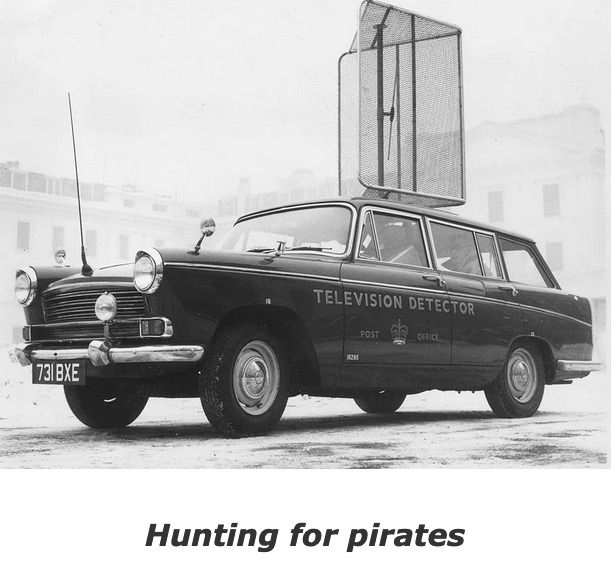
Joynson-Hicks, struggling to adjudicate, had a committee appointed with Frederick Sykes, son-in-law of the Prime Minister, Andrew Bonar Law, in the chair. It began hearings in May, on which sat John Reith and to which the BBC board and Reith argued that “it was ‘one of the fundamental essentials of the Agreement’ that there should be no evasion” and that “the only satisfactory way of preventing evasion was to prosecute people who did not possess wireless licences”. Detection was often possible thanks to the “prominent outdoor aerials”. In Briggs’ words, “Although it might have been difficult to prosecute all offenders, the psychological and moral effect of prosecuting a few known offenders would have been very great.” 68

By the time the committee reported, another new Postmaster-General, Laming Worthington-Evans, had been won over by Reith in private and the licence fee began to be enforced in earnest. “Post Office motor vans” were sent out “not to detect but to intimidate” the “scroungers”, “eavesdroppers” and “pirates” who showed a dearth of “sportsmanship” by using equipment lacking the required BBC marque. 69 The public began to be habituated to obey the broadcasting monopoly and its directors.

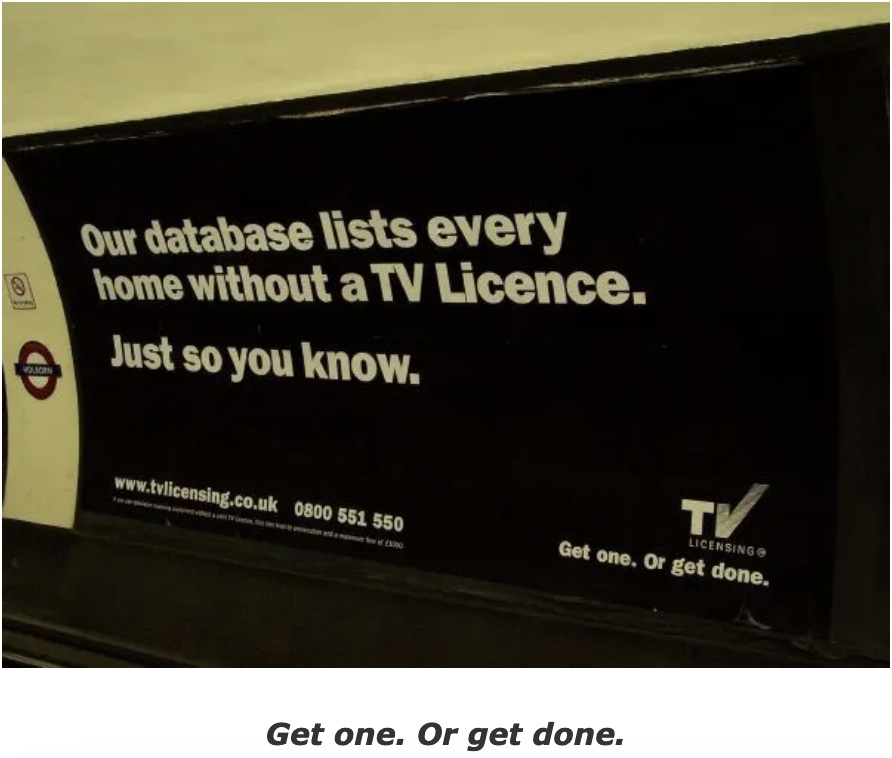
Get one or get done


Footnotes

49 The BBC itself published a history omitting mention of Isaacs or Sarnoff.

50 McIntyre, p116

51 Briggs, Birth, p137. Kellaway’s move to Marconi was mentioned in Parliament.

52 McIntyre, p116

53 Briggs, BBC, p43

54 Briggs, BBC, p45

55 The Master Switch, Tim Wu, 2011, chapter 4

56 Briggs, BBC, p44

57 The other directors of the BBC are listed here.

58 William Noble was remarkably supportive of a scheme he claimed had been imposed on his firm by the Post Office.

59 “ ‘BBC programmes are often rendered farcical’, Noble complained [in January 1923], ‘by interference caused by amateurs tuning up and causing disturbance and by the transmission of messages’.” Briggs, Birth, p148. This appears to be a fabrication.

60 Briggs, Birth, p146-7

61 Briggs, Birth, p160-1

62 Briggs, Birth, p180-2

63 Briggs, Birth, p160-1

64 Police action “should be preceded by the publication of an official notice in the newspapers stating that the Postmaster General was aware that many unlicensed sets were being used and that their owners would immediately be prosecuted.” Briggs, Birth, p147

65 Briggs, Birth, p149

66 “Sir William Bull, who was the only director of the BBC who was also a member of parliament, reminded Joynson-Hicks that it had been the Post Office which had suggested this arrangement. The Postmaster-General equivocated, saying that it had been ‘the result of numerous negotiations between the Broadcasting Company and the then Postmaster-General.’” Briggs, Birth, p161-2

67 “Sir W. Joynson Hicks (who had become Postmaster General after Mr. Neville Chamberlain) said in the House of Commons that Mr. Kellaway had made the agreement. Mr. Kellaway thereupon wrote to The Times saying that the agreement was made by Mr. Chamberlain three months after he had left the Post Office. Mr. Chamberlain replied in a speech that “this was a transparent quibble. He had only put his name to it and not altered a word”. Mr. Kellaway then wrote another letter to The Times in which he claimed that “this involved the most startling evasion of responsibility”. See The Times for April 21st, 23rd, 24th and 26th, 1923.” Coase, Origins, p201, note 4

68 Briggs, Birth, p166

69 Briggs, Birth, p192, 220


For the remaining parts of this study, click here for Part 1, click here for Part 2, and click here for Part 4.

The murky origins of the BBC – Part 2


This series of posts covering the topic of the unsavoury origins of the BBC is re-posted by kind permission of The Occidental Observer, where the original article can be found in full at this link. This is Part 2 of 4 parts.

Chaos of the ether

The American government and its favoured business partners had effectively nationalised wireless technology to an extent sufficient for the needs of the navy. The private, small-scale use of the same technology was of doubtful legality but had occurred sporadically in both the US and UK after it became possible. The US Secretary of Commerce from March, 1921, Herbert Hoover, a ‘co-operationist’ (between the government and the largest businesses), issued a hopeful decree: “There were … an estimated 14,000 amateur radio operators and in January 1922 the Department of Commerce ordered them to stop sending signals[.]”. 21 He had already attempted unsuccessfully to deprive small companies of radio licences, but for his purposes the Radio Act of 1912 had been found wanting. Thus “Hoover called his first radio conference in Washington DC from 27 February to 2 March 1922 to ask for industry advice on regulation.” 22 David Sarnoff had by then already been a leading ‘industry adviser’ for the best part of a decade and was an advocate for the interests of RCA, which were then largely in manufacturing and selling wireless equipment.

In Britain, according to Asa Briggs, “[d]uring the first years of broadcasting experience it was not distaste for American advertising which influenced the first British critics of American broadcasting, but alarm at the ‘chaos of the ether’ in the United States.” 23 That alarm was carried across the Atlantic by F. J. Brown, the British Post Office’s Assistant Secretary, who attended the conference in February 1922 and transcribed a speech by Hoover. Hoover argued for broadcasting to be distinctly more restricted and centralised than the press and raised the threat of “material of public interest” being “drowned in advertising chatter”, though he “did not say that it was already happening. … The conference recommended an outright ban on ‘direct’ advertising citing a shortage of wavelengths; a decision Brown would highlight upon his return to London.” 24

As Ian McIntyre says, in Britain “…the Wireless Telegraphy Act of 1904 vested the power to license all transmitters and receivers in the Post Office”; the Post Office was not yet licencing any transmission other than occasional experiments. 25 The BBC-approved historian Briggs treats Brown’s portrayal as accurate:

The multiplicity of radio stations and the scarcity of wavelengths led to interference and overlapping, ‘a jumble of signals’ and a ‘blasting and blanketing of rival programmes’. Even in America itself, despite its tradition of free enterprise, there was pressure for government ‘policing of the ether’. The government’s powers… were quite inadequate to control the new medium. A few Americans were even tempted to look with approval on the British Post Office.” 26

Yet, according to David Prosser, who attends more closely to the details,

“ ‘…so-called interference by amateur radio operators was exaggerated’. The real problem was that early radio transmitters could not adhere to a wavelength with any degree of accuracy and receivers similarly tended to drift.” 27

Interference among stations appears to have been imaginary at the time Brown reported back. “Reports of actual interference between stations would not appear until October (by which time negotiations to establish the BBC were concluded), and then only on one occasion in New York.” 28 Brown himself reported hearing radio in America without interference. “That Brown was ‘certain’ stations interfered with one another, yet what he heard was ‘quite clear’, remains a puzzle. Pressed on this question in later evidence to a parliamentary committee, Brown admitted ‘chaos’ may have been an exaggeration but ‘experts’ had assured him ‘there was a good deal’.” 29

The ‘chaos of the ether’ was less an empirical statement than an implicitly normative one based on growing opposition among businessmen and politicians to competition; the “tradition of free enterprise” mentioned by Briggs had already been partially supplanted by ‘progressive’, cartelist ‘co-operation’ from Morgan, Rockefeller, Kuhn, Loeb and other major business interests and politicians since at least the turn of the century. 30 To allow a market in broadcasting would go against their wishes. Additionally, from the start, the manufacturers of wireless equipment were important military contractors. The broadcasting operations established on either side of the Atlantic became seen as strategic assets by the state, as became especially evident in the Second World War.

Difficulty of selection

According to Prosser, when Brown returned to London, he found that “the Postmaster General faced mounting pressure from manufacturers and amateur enthusiasts to allow regular broadcasting. … By April, twenty-four firms had applied for transmitting licences”. Brown anonymously briefed The Times, saying that “…wireless has become a ‘perfect craze’ with ‘a great deal of mutual interference between stations …  [that] the [U.S.] Government has had to appoint a committee with a view to imposing restrictions’.” 31

Brown’s selective reporting helped make the case for a highly restrictive application of the broadcasting laws in Britain, the likes of which Hoover wanted for the USA but was at that time unable to secure. Briggs attributes to Brown’s advice an answer by his superior, the Postmaster-General, Frederick Kellaway, in Parliament in April 1922.

Kellaway asserted that “a large number of firms broadcasting … would result only in a sort of chaos” which would compel him “to lay down very drastic regulations indeed for the control of wireless broadcasting”, which, nevertheless, Kellaway said was “what we are now doing at the beginning”. 32 The deception succeeded. “Within three weeks, the Wireless Sub-committee agreed that broadcasting should be allowed between the wavelengths 350-425 metres from 5 PM – 11 PM weekdays and all day on Sundays and the decision was made that advertising should be prohibited.” 33 “[N]ews not previously published in the Press” would “be banned”. 34 Most aspiring broadcasters were ruled out. “In early May, Kellaway announced that a ‘limited number of radio telephone broadcasting stations’ were to be permitted, but this time added that only ‘bona fide manufacturers of wireless apparatus’ were invited to… ‘cooperate’,”,a euphemism for forming a cartel. Kellaway stated that, faced with “the difficulty of selection” among applicants, limiting the number of providers was necessary. 35 Thus, in the first place, “the problem to which a monopoly was seen as a solution by the Post Office was one of Civil Service administration. The view that a monopoly in broadcasting was better for the listener was to come later.”36

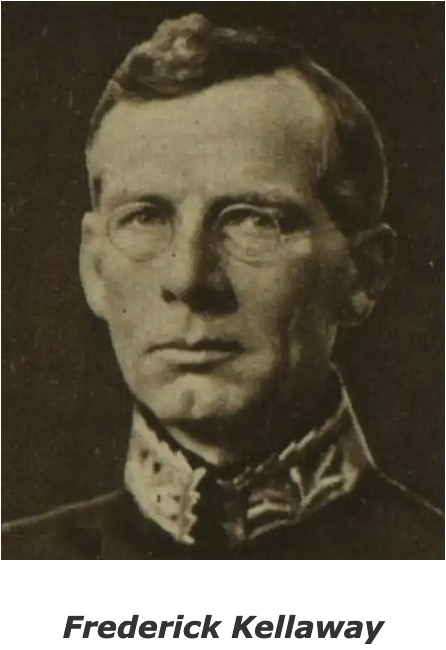
Frederick KellawayKellaway stated that he wanted “no danger of monopoly”; Prosser says this was an allusion to “Marconi’s market dominance”. 37 A statement from Godfrey Isaacs in April had implied that he expected or intended that Marconi would be granted sole control of broadcasting, probably because of its patents. 38 This did not eventuate, but at any rate, as Ronald Coase says, “the manufacturers’ main interest was not in the operation of a broadcasting service but in the sale of receiving sets” 39 The scheme soon to be agreed on and approved by the Post Office would oblige the public to buy from an approved list of suppliers. As McIntyre says, “[t]he origins of British broadcasting … were almost purely commercial” in that the manufacturers’ profits were a priority.40

Formation of the company

The Marconi company was ideally positioned to be the prime beneficiary of the Post Office’s scheme. Isaacs, more than anyone else, also determined what the scheme would be at a meeting of the ‘Big Six’ manufacturers in May 1922. A written account of the meeting was only discovered or revealed in 2018 and, according to Prosser, “[a]lthough the meeting was chaired by Sir Evelyn Murray, the Secretary of the Post Office, it is Godfrey Isaacs, the managing director of Marconi, who emerges from the pages of this transcript as the dominant force in the room.” 41

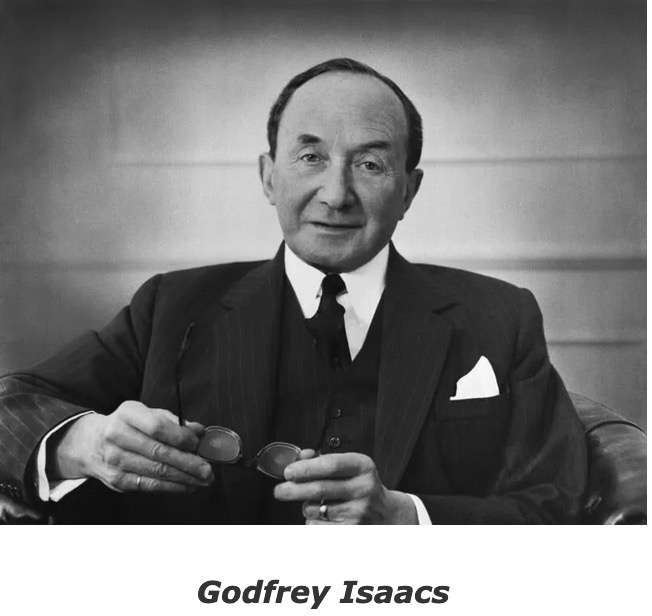
Godfrey IsaacsContrary to myths prevailing before the transcript was discovered, the Post Office “was prepared to issue multiple licences”, or at least to allow discussion along such lines, and “Metropolitan Vickers, the Manchester-based company formed out of British Westinghouse and still associated with its American former owner, resisted the idea of a single provider and called for competition”. 42 ‘Met-Vick’, “along with the Radio Communication Company … and the Western Electric Company … constituted the nucleus of a possible ‘second group’.” The ‘first group’ comprised Marconi, the General Electric Company plc (unrelated to the US firm of similar name), and British Thomson-Houston. As Briggs says:

There were definite business links between the Marconi Company, GEC, and BTH. The Marconi Company and GEC jointly owned a valve-manufacturing company, while BTH, linked with the American General Electric Company, had a common interest with the Marconi Company through the Radio Corporation of America and a patent-sharing agreement.” 43

The Marconi group had the trump card. “Isaacs made clear that he didn’t believe a ‘transmitting station can be erected to work efficiently’ without using Marconi patented technology, which he would only make available to a single scheme.” 44 The strongest concurrence to Isaacs’ view came from Hugo Hirst (born Hugo Hirsch), chairman of GEC, which he had co-founded with his fellow Jewish immigrant from Germany, Gustav Binswanger. 45 After strenuously protesting, Metropolitan Vickers, the last resisters, “[fell] into line behind a single scheme” in June.46

Isaacs also successfully demanded a licence fee scheme that would guarantee revenue for the manufacturers. Thus “[w]hat emerged was a single broadcaster operating at arms-length from the Post Office providing a ‘public service’ with national content shared between regional stations, funded by a licence fee with advertising prohibited.” 47 Historian of the Marconi company Tim Wander credits Isaacs with “deftly negotiat[ing] a coming together of the disparate wireless-producing companies … in order to create the new British Broadcasting Company” and lauds him as “[t]he man who made the BBC”. 48


Footnotes

21 Marconi Proposes, David Prosser, Media History, Volume 25, Number 3, p5

22 Prosser, p3

23 The Birth of Broadcasting, Asa Briggs, 1961, p64

24 According to Hoover, “…the wireless has one definite field, and that is for the spread of certain pre-determined material of public interest from central stations. This material must be limited to news, to education, to entertainment, and the communication of such commercial matters as are of importance to large groups of the community at the same time. It is, therefore, primarily a question of broadcasting, and it becomes of primary public interest to say who is to do the broadcasting, under what circumstances, and with what type of material. It is inconceivable that we should allow so great a possibility for service, for news, for entertainment, for education, and for vital commercial purposes, to be drowned in advertising chatter, or to be used for commercial purposes that can be quite well served by our other means of communication.” Prosser, p4, 6. “Note also here the morphing of Hoover’s original phrase that it is ‘inconceivable’ that the ether should be used for ‘advertising chatter’ to there being already a ‘mass of “advertising chatter”’.” Prosser, p10

25 The Expense of Glory, Ian McIntyre, 1993, p120

26 Briggs, Birth, p64

27 Prosser, p5. Prosser is a BBC employee.

28 Prosser, p5. “The first issue of Radio Broadcast in May 1922 (published several weeks after Brown’s visit) counted ‘altogether, according to present available information … more than twenty stations which broadcast extensively’.” The magazine described the experience as one of “watching and waiting”, which “does not suggest the editor of Radio Broadcast felt the airwaves were overly congested by this time. In New York, where 15 stations operated on a single frequency, an agreement was reached in July 1922 for allocation of time. Reports of actual interference between stations would not appear until October (by which time negotations to establish the BBC were concluded), and then only on one occasion in New York.”

29 Prosser, p1-2. Brown “…failed to communicate another, and ultimately for American broadcasting, more significant development. Toll broadcasting, defined as ‘broadcasting where charge is made for the use of the transmitting station’…” Prosser, p6

30 See The Progressive Era, 2017, by Murray Rothbard which draws heavily on The Triumph of Conservatism, 1963, by Gabriel Kolko.

31 Prosser, p7-8

32 Briggs, Birth, p67-8

33 Prosser, p8

34 The BBC, Asa Briggs, 1985, p29

35 Coase, Origin, p208. See also Briggs, Birth, p159. The Daily Mail and Daily Express were among newspaper applicants for broadcasting permission. In the 1950s, selection must have ceased to be perceived as a difficulty, as the state selected various private consortia to broadcast alongside the BBC.

36 Coase, Origins, p210. My emphasis.

37 Prosser, p9 and McIntyre, p120

38 “A noteworthy omission in Mr. Isaacs’ statement is that he makes no reference to the repercussions which the Marconi Company plan would have on those of the other companies which desired to start broadcasting or to the problem of how the wavelengths would be allocated between the various companies.” British Broadcasting – A Study in Monopoly, Ronald Coase, 1950, p9

39 Coase, Study, p18-19

40 McIntyre, p120

41 Prosser, p11

42 Prosser p11, 13

43 Briggs, Birth, p108

44 Prosser, p11, 13, 16 and Briggs, Birth, p108

45 Prosser, p12. GEC was originally named after Binswanger.

46 Prosser, p13

47 Prosser, p16

48 Godfrey Isaacs and the BBC, Tim Wander, 2024. “We can identify the exact moment the BBC was conceived. It was not the Post Office that proposed the BBC, but Godfrey Isaacs of Marconi.” Prosser, p16


For the remaining parts of this study, click here for Part 1, click here for Part 3, and click here for Part 4.

The murky origins of the BBC – Part 1

Horus

This series of posts covering the topic of the unsavoury origins of the BBC is re-posted by kind permission of The Occidental Observer, where the original article can be found in full at this link. This is Part 1 of 4 parts.

Chaos of the Ether, Or “The Second Marconi Scandal”: On the origins of the BBC

In the last article I discussed the role of the press and broadcast media in undermining peace in the years preceding the British declaration of war against Hitler’s Germany. My research led me to examine the origins of the British Broadcasting Corporation, which I found to be closely related to the forming of the Radio Corporation of America (owner of the National Broadcasting Company) and the Columbia Broadcasting System,  long-dominant  and first two broadcasting corporations in the USA.

The role of the small Jewish minorities in the USA and Britain in the forming of each of these corporations, and in ownership and management of major media organisations ever since, has been of historic importance. By the late 1930s, the BBC, NBC and CBS were all actively assisting the forces aiming at war with Germany. In the cases of both Britain and America, the first two decades of what came to be called public broadcasting set the trend for the relationship between the media, the public, and the state that exists now.

Marconi and Isaacs

The BBC was intentionally founded as a broadcasting monopoly reliant on technology patented by Marconi’s Wireless Telegraph Company. The BBC’s founders followed the example of Guglielmo Marconi himself. According to James Crowther, Marconi “aimed from the first at a monopoly of wireless”, following “his first patent, the first in wireless, with every possible patent of each conceivable improvement”, trying to “establish an impregnable defensive position” around his innovations.1 His family wealth and connections “helped him to secure financial support for founding the first wireless company in 1897”.2 An American subsidiary followed. The Marconi Company produced a series of innovations but was of limited financial success under Marconi’s management.3 Looking to delegate so as to focus on research, in 1909 Marconi was recommended “a very young but fairly experienced businessman”, Godfrey Isaacs, by whom he was impressed, “chiefly because of [Isaacs’] City connections, and his influence with finance houses in London and Europe.” After a trial period, Isaacs became Marconi’s managing director.4 In March the following year, his brother Rufus, Liberal MP for Reading, became Solicitor-General in the government of Herbert Asquith, and in October the same year became Attorney-General and the second professing Jew in a British cabinet.5

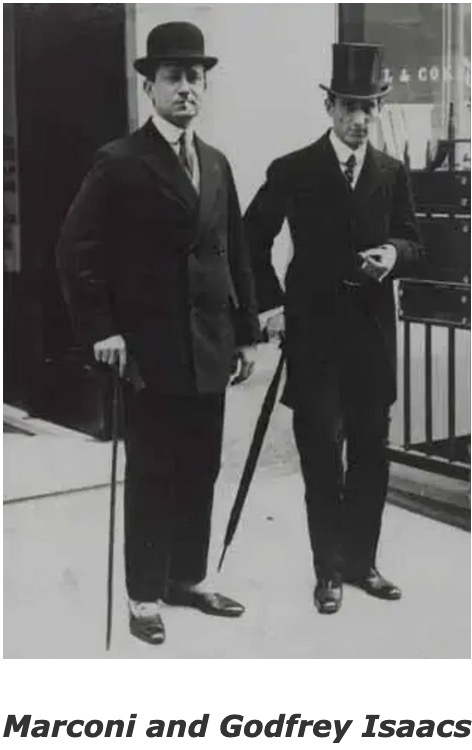
Marconi and Godfrey Isaacs

Godfrey Isaacs “set out first to consolidate the Company’s hold on the key wireless patents. Then he sought to increase turnover by offering new technical services, by using aggressive salesmanship to capture business from rivals in established markets, and by building up the financial interest of the parent company in associate companies abroad.6 Guglielmo Marconi had lobbied the British government to adopt his ‘imperial wireless chain’ project, which would create a vast state monopoly with his firm as the sole supplier. Largely due to the persistence of the new managing director and his “vague threats about the possibility of selling the Marconi system to Germany if the British government was not interested”, the government took the proposal with increasing seriousness, eventually contracting Marconi as the construction supplier—less than the full monopoly sought but a lucrative and prestigious contract.7

In March 1912, “having virtually concluded the dealings with the English government”, Isaacs and Marconi travelled to New York, “ostensibly for a legal action against the American Marconi Company’s chief rival, the United Wireless Company of America, over a question of patent infringements.” United Wireless was in a perilous state due to corruption and mismanagement and the Marconi action aimed to “eliminate their rival” before new owners could revive it and “obtain the assets” of the company; in order to benefit by making use of the newly-acquired assets, Marconi needed to increase its working capital by issuing new shares. “The directors of American Marconi insisted that, before they would agree to the increase in capital, the English company should guarantee the ‘whole amount to be subscribed’.8

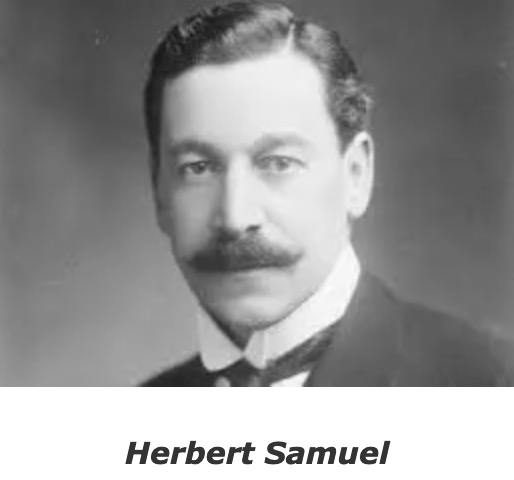
The assets were acquired successfully. The parent company’s aggressive attempts to enact the guarantee, and the coincidence of the RMS Titanic disaster in April, which caused a surge of demand for Marconi’s ship-to-shore communication devices, led to the infamous Marconi Scandal of that year; Godfrey and Rufus Isaacs, with their brother Harry, along with the Chancellor of the Exchequer, David Lloyd George, and a senior government whip, Alexander Murray, were accused of insider trading, though were not found by Parliament to have done wrong.9,10 The Postmaster-General, Herbert Samuel (born Eliezer ben Pinchas Shmuel), the first professing Jew in a British cabinet, was accused of favourable treatment of Marconi’s imperial wireless project.11

Herbert Samuel

David Sarnoff and RCA

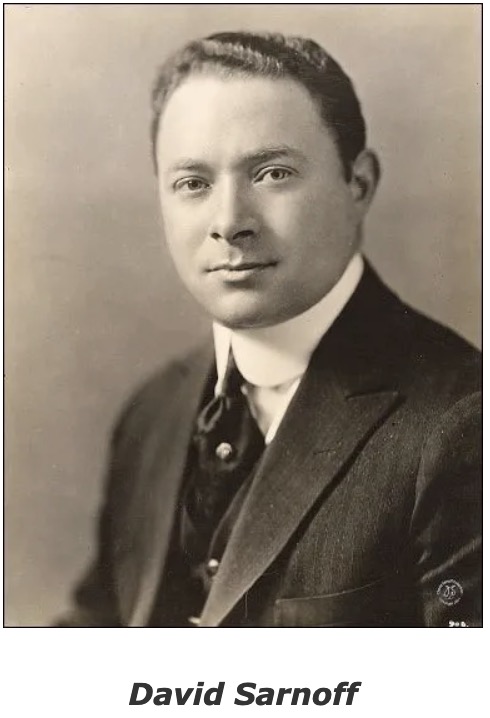
The career of David Sarnoff, a Jewish immigrant to the US from a village near Minsk, began at the American Marconi Company. Sarnoff appears to have excelled as a wireless operator when wireless technology was primarily used for shipping communication. Guglielmo Marconi had expected his own innovations to result in ‘wireless telephony’ between two individual parties. According to Ronald Coase, in about November 1916 Sarnoff wrote to Isaacs envisaging “the possibility of a broadcasting service”, wherein sound would be transmitted openly to all those with the ability to receive and listen to it. 12

Sarnoff, at the age of 25, had in the US already become a “spokesman for the industry, in his capacity as secretary of the Institute of Radio Engineers”. 13 When the USA declared war on Germany in April 1917, the government “took control of all high-powered radiotelegraphy stations, including those of the Marconi Company”. 14 By the end of 1919, the government, especially the Department of the Navy and the protectionist element in Congress, compelled American Marconi to yield its assets to the new Radio Corporation of America, which, according to Eugene Lyons, was “the old American Marconi Company in a revised corporate form, with major ownership and dominant control vested in General Electric”. RCA’s articles of incorporation obviated foreign control. 15 Owen Young, the first chairman of RCA, was a senior executive at General Electric, which was firmly aligned with the business and political interests centred upon J P Morgan. 16

David Sarnoff began at RCA as the commercial manager, but with great influence over the whole company. As Eugene Lyons describes:

At the time RCA was born, research engineers … were concentrating on a transmitter for radiotelephony. Point-to-point communication still seemed the essence of the challenge. Almost at once Sarnoff began to press them to switch priorities, to concentrate their energies on apparatus for household reception and transmission geared to the same purpose.” 17

Sarnoff’s intention of bringing about a broadcasting service required the ‘pooling’ of patents held by RCA with those of other, potentially rival, firms. As Lyons says,

Young’s business acumen solved the problem by drawing Westinghouse into the GE-RCA pool. Through an agreement that became effective in mid-1921, the Westinghouse storehouse of radio patents and licenses became accessible to GE and RCA. In return, Westinghouse won a 40 percent share in all manufacturing for RCA, with GE retaining 60 percent for itself.”

United Fruit also owned some important wireless patents and joined the ‘Radio Group’ patent pool. 18

David Sarnoff

Sarnoff’s long-term strategy consisted of gathering and leveraging patents and excluding most, or if possible, all rivals from being able to compete; thus, though RCA separated from Marconi, both companies were led by men driving at very similar cartelist or monopolist strategies relying on Marconi’s patent power.19 Historians, especially Lyons, portray Sarnoff as a public-spirited visionary, but even the most laudatory accounts clearly show that he resembled a baron ruling a fief, and was as willing to deprive the public of the benefits of innovation as he was to deliver them. 20

Footnotes:

1 Six Great Inventors (3rd ed.), James Crowther, 1960, p138

2 TheMarconi Scandal and Related Aspects of British Anti-Semitism, 1911-1914, Kenneth Lunn, 1978, p1

3 Lunn, p2

4Lunn, p3

5 The ability of Jews to sit in Parliament owed to the lobbying of Lionel de Rothschild in the previous century. Lionel’s friend Benjamin Disraeli was of Jewish ancestry but professed Christianity.

6  Marconi, W P Jolly, 1972, p190

7Lunn, p222

8  Lunn, p4-5

9  David Sarnoff, Eugene Lyons, 1966, p60. Also see Lunn, p4-5. Eugene Lyons, a biographer of Sarnoff, was also a Jewish immigrant from the same village and was Sarnoff’s junior by seven years.

10  “[GK] Chesterton… made much of the fact that Godfrey Isaacs had been at the head of or implicated in no less than twenty bankrupted companies, and someone with a sandwich board with words to this effect had wandered up and down the street outside Godfrey’s office.” https://counter-currents.com/2016/03/the-marconi-scandal/

11  We mention five different Postmaster-Generals in this essay; it was a vital position in relation to telecommunications.

12  Coase adds “doubtless the same idea had occurred to others.” The Origin of the Monopoly of Broadcasting in Great Britain, Ronald Coase, Economica (New Series), Volume 14, Number 55, August 1947, p190.

13  Lyons, p75

14  Lyons, p76

15  Lyons, p80-4

16  J P Morgan, son of the famous financier of the same name, had influenced the US in favour of joining the Great War on Britain’s side and profited enormously from the outcome. Morgan partners, and Morgan senior himself, had since the start of the century been leading advocates of ‘progressivism’, ‘preparedness’ for war and ‘elasticity’ in money.

17  Lyons, p97

18  Lyons, p94-5. “All manufacturing was to be done by GE, all marketing and communications services rested with RCA. By means of a cross-licensing arrangement, each organization had full access to wireless patents held by the other. Not a word was said, forthrightly, about broadcasting; even at the end of 1919 its business potential was underrated or ignored—except by the commercial manager.” Lyons, p84

19  Sarnoff became president of RCA in 1929.

20  To be discussed in a future article (On theoccidentalobserver.net).


For the remaining parts of this study, click here for Part 2, click here for Part 3, and click here for Part 4.

The UK General Election 2024 – Lessons to learn for Racial Nationalists – Part 2

In Part 1 of this series we discussed what the figures behind the votes in the General Election meant for Racial Nationalists. Here, we identify voting patterns and discuss the way ahead.The Immigrant Vote

Britain’s minority ethnics (who probably won’t be a minority for much longer) have traditionally been overwhelmingly Labour voters. But in this election a new trend has developed.

Many of these people, especially Muslims, identify with the Palestinians in their struggle with the Israeli bandit state. The war in Gaza that started on October 7th last year has galvanised this feeling intensely. For that reason, many of them do not support Labour any more. They don’t feel attracted to the Tories either. After all, both Labour and the Tories (and the LibDems) have a “Friends of Israel” section that exercises disproportionate power in the party.

With the non-White population here burgeoning like never before, the time has arrived when they can exercise considerable influence on the result of elections. Many Muslims have abandoned Labour and support the Greens, who are the only party to publicly support the Palestinians against Israel.

The Greens, generally, are more extreme left wing than Labour. Most of them are former Communists, Trotskyists and Anarchists. Their policies on the environment are largely the same as those of the main parties, but taken to their logical conclusion. If given the chance, they would ruin the economy and impose a dictatorship over the general population “to protect the environment”. This is a trend to watch in future elections.

The Negative Vote

Another factor to consider is this. Probably since the 1960s, and possible before, increasing numbers of voters in our country have voted negatively at General Elections. They have given up hope of being able to vote for a candidate or party that truly reflects their own opinions, feels their own fears, and shares their own aspirations. So they vote against the party or candidate they hate the most. This keeps many people voting for the same party in every election.

They daren’t vote for a minority party, even though its policies may reflect their own views more than those of any other party, for fear that it may help the “other lot” get in. Both Labour and the Tories take advantage of this by urging voters not to “waste” their vote on a candidate that “cannot win”.

The two main parties are the main beneficiaries of negative voting. People vote Labour to keep the Tories out, and vice versa. But this may be coming to an end, at last. With the success of Reform UK in getting a foothold in Parliament and replacing the LibDems as the third party nationwide, the stranglehold on British politics that Tory and Labour have enjoyed for so long may be loosening.

Just one more thing to note about negative voting. And that is that by-elections are different. There people can vote for one of the minority candidates (there are often several in a by-election) to give their usual favoured party, particularly if it is the party in government, a “kick up the backside”. And without the danger of really upsetting the applecart.

These are often positive votes, albeit misrepresented by the mainstream media as a “protest vote”. For that reason it is to be hoped that the new Parliament will, in time, provide a healthy number of by-elections where the two main parties can receive a bloody nose. That, at least, is my “negative wish”.

The Way Ahead

I’ve mentioned Reform UK a number of times in this post and the previous one. It would be impossible not to, given their meteoric rise in recent years. They are represented as the chief party of the “far right” by the mainstream media, which is not surprising. Compared to the two main parties and the LibDems, they are “far right”, but only because those other parties are so far to the left. Nigel Farage and the rest of the Reform UK leadership have been careful to distance themselves from genuine racial nationalism, which itself is not necessarily “far right”.

This is from fear that the mainstream media will give them an even worse press, and that the criminal elements of the left will be mobilised against them, as they were against the National Front in the 1970s.

They would have to endure personal physical violence and all the other tricks of the left – cancellation of meeting hall agreements, accusations of “nazi” links, and violence at meetings so as to associate them in the public mind with violence and therefore not a party to vote for.

Hence their softly, softly “populist” approach, talking about “net migration” figures as if the qualities of the migrants coming in every day across the Channel and into our airports are much the same as those of native Britons emigrating out of Britain.

British racial nationalists know better than to fall for that one. Farage and his comrades won’t talk about race or ethnicity. They won’t point out the obvious – that the recent riots in Leeds, Manchester, Southport and East London, for example, are race riots. They won’t talk about how immigrants themselves are “racist”. About how they even wage war against each other based on which group of people they support in their home countries. In East London, for example, the rioters comprised two groups of Bangladeshis fighting each other over events happening in Bangladesh.

If Farage and his team had only been honest, and had the courage to come out and say that race is the issue, they would have had millions more voting for them. They would probably have fifteen or more MPs. The Reform UK voters are voting for immigration to stop. But they are also voting for the existing migrants from the third world that already live here to be repatriated, by force if necessary.

They are saying that they don’t want to disappear from history in a sea of black and brown through miscegenation, or racial interbreeding. They don’t want their grandchildren, or any more remote descendants of theirs, to be anything other than White, just as they are.

More anti-White measures on the way

One last word. It’s already evident that Starmer, even though his party only garnered the support of one in five registered voters, isn’t afraid to throw his weight around in bringing in more anti-White measures. It’s quite possible that Labour’s policy of bringing in quotas, so that every Council in the country has to house a minimum number of migrants, probably in council and social housing that White people themselves need, will, somewhere, some time, provoke some kind of violent reaction from the locals.

In fact that is probably what Labour and the anti-White establishment is hoping for. It will be their excuse to ban all “far right” political parties, on the basis that their existence encourages anti-immigrant violence and is a threat to law and order.

If they do such a thing, it may well be the spark that starts the fire. Our main towns and cities are already tinderboxes waiting to explode into flames. And for that the establishment has nobody to blame except themselves.

But they will blame people like us in a bid to save their own skins, and eliminate all effective opposition to their revolting plans for the final destruction of our country and race.

It will be up to us and all who follow us in the years ahead to out-manouvre these traitors and vermin.

The UK General Election 2024 – Lessons to learn for Racial Nationalists – Part 1

The UK General Election 2024 took place earlier than most people thought it would, but now it is over and the dust has settled it’s time to take a close look at the results.

We all know that Labour romped home with a massive majority, picking up an additional 214 seats, and the Tories lost over 250 seats, including those of several high-profile cabinet ministers.

So that gives Labour not only a comfortable majority in the House of Commons, but a mandate to, in Kier Starmer’s words, “change the country beyond recognition”. That sounds ominous. The country’s already “beyond recognition” compared to what it was just 50 years ago, and not in a good way.

It’s in even more of a shambles, and a most dangerous situation, thanks not least to incompetent and treacherous Labour administrations since 1945. So it’s difficult to conceive just how it could be changed “beyond recognition”, unless he means actually making it a better, more civilised country, something Labour is incapable of doing.

Starmer at the WEF meeting in January 2023

From reading the output of the mainstream media one could be forgiven for thinking that Labour had received millions more votes than in 2019 and had the support of at least a decent majority of voters in the country.

The “loveless landslide”

In fact, Labour received about 544,000 fewer votes than in 2019, when they were commonly regarded as having been soundly rejected by the voters. It’s true their share of the vote rose slightly (33.83 per cent as opposed to 32.08 per cent), but only because the turn-out was the next lowest since 1945, at less than 60 per cent.

So only 20 per cent (0.6 x 0.3383) of eligible voters voted Labour. And how many did so just to teach the Tories a lesson we shall never know. Hardly a ringing endorsement of their policies, let alone a mandate to bring in substantial changes to anything. Nigel Farage has dubbed it a “loveless landslide”, which you may think is an apt description.

The mechanics of the voting system, the “first past the post” (FPTP), have often in the past produced surprising results, at odds with the general feeling in the country. This was even more pronounced than ever before in this election.

For example, Reform UK had the third largest share of the votes, at 4.103 million. That was 14.28 per cent. Yet they won only five seats in the Commons. The LibDems, however, won 71 seats, but with only 3.501 million votes (12.18 per cent) – over 600,000 fewer than Reform.

The DUP won the same number of seats – five – with only 172,000 votes. Sein Fein won two more than Reform with less than 211,000 votes.

The Greens won four seats with a total vote of well under half of those won by Reform.

But the most telling statistic is that the combined vote of Labour and Conservative amounted to only 16.55 million (57.57 per cent of the total votes cast and just 34.54 per cent of eligible voters). Yet, between them they won 533 of the 650 seats available. That’s eighty two per cent.

It’s safe to say that FPTP is here to stay for a long while. No matter how unfair it is, it’s still “democratic”. But there is an alternative.

Time for Proportional Representation?

Let’s take a look at what the result would have looked like if we had a system of Proportional Representation (PR) in place.

Labour would still have the largest number of Commons seats, but it would hardly be a “landslide”. In fact they would be a minority government, with just 219 seats – not much more than half their actual number. Everyone else, except the minority parties that polled only a few hundred thousand votes, would have considerably more seats than they do now.

Everyone else, that is, except the LibDems, who would have 79 seats – only eight more than they actually won this time round. The LibDems have campaigned for PR in the past, when they held just a handful of Commons seats. Somehow I doubt that they will be quite so keen on it now.

It’s clear that the two main parties are more than happy with FPTP. Even though it keeps them out of office for years at a time, it does deliver to them for the rest of the time the ability to govern for up to five years in a way that does not have the support of the majority in the country. They have a majority in the House of Commons, and that is what counts. We thereby have a “stable” system of government.

The only thing that could upset the status quo here would be if one of the minority parties – Reform UK (or whatever it will be called by then) or the Greens, for example – managed to become the second largest party in the House of Commons and able, somehow, to create a constitutional crisis over the issue. But by that time it’s possible that FPTP would actually benefit the parties that it now penalises. So who knows what may happen?

Comparisons with the 2019 General Election

It’s always interesting to compare the results of a General Election with the previous General Election. The turnout was only 59.9 per cent, compared with 67.3 per cent in 2019, and 68.9 per cent in 2017. Labour increased its percentage of the vote by only 1.73 per cent, yet won 209 more seats – nearly a third of the total seats in the Commons. The Conservatives haemorrhaged votes, losing 7.142 million – more votes than they actually won, and more than half the number they won in their 2019 “landslide”. Their percentage of the vote almost halved – down to 23.74 per cent from 43.6.

We all know why the Conservatives did so badly. It wasn’t just because of their complete failure to stem the tide of immigration, both legal and illegal. It was also because of the chaos that came to be associated with their style of government. By that I mean the charade we witnessed when Boris Johnson resigned as Prime Minister, and the short-lived premiership of Liz Truss.

Then there’s also the hypocrisy of the Johnson administration in imposing lockdowns on the general population, supposedly to stem the Covid 19 pandemic, while at the same time attending wild parties themselves, where they could forget about masks, social distancing, and all the other constraints the rest of us had to abide by or risk prosecution.

And overshadowing everything else was the Brexit betrayal, covered in this blog in some detail. It became clear that all the Tories cared about here was that they could, by promising to abide by the Referendum result, steal Labour votes, particularly in the “red wall” of Labour’s traditional strongholds in the north.

Once that was done they could let the EU stifle our struggle for independence, and party on. Now it seems likely that Starmer, as soon as he thinks he can get away with it, will take us back into the EU, or at least sign up to a series of “protocols”, “agreements” and the like that will, by stealth and over time, result in our being subjugated all over again to the diktats of the European Commission.

In Part 2 of this series we will take a look at the Immigrant vote and the Negative vote, and discuss the way ahead.

Exposing hysterical and wicked misinformation about the Coronavirus and vaccinations

Martin Webster
Note - This post first appeared on Anglo-Celtic.org in 2020, when the Covid-19 emergency was at its height, but before the vaccines had been introduced.

There is a large amount of hysterical and wicked misinformation about the Coronavirus and related topics being circulated via the internet at the moment. A lot of this is generated by so-called ‘right wing’ and white-nationalist groups in the USA. Some may emanate from ‘disinformation’ agencies in Russia, China, Israel and elsewhere.

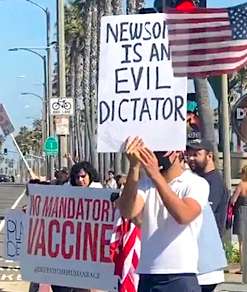
US anti-vaccine demonstrators

So far as the American groups are concerned, their main motivation seems to be opposition to all vaccination and inoculation programmes — including a future vaccine against Covid-19 — which they see as vehicles for ‘Big Brother’/Globalist power mechanisms to subjugate and regulate the Everyman (and woman).

Whatever common sense these people were born with seems to have departed from them because they deploy crude forgeries and misrepresentations in e-mail bulletins and YouTube videos in order to advance their anti-vaccination obsession.

This mendacious output is easily exposed. — I give two examples below — and so their efforts not only fail to advance their anti-vaccination cause, they undermine the credibility of any information on any subject from all nationalist and right-wing sources. (That is a bone for ‘conspiratologists’ to gnaw on!)

There are Globalist conspiracies to dragoon Mankind into a World Government. They operate in open sight.

Methods to regulate and subjugate individuals will be a necessary feature of any such global regime. Indeed, sinister and undemocratic “social control” measures are already being deployed by states world-wide — including the UK — to ‘manage’ their citizenry. There is nothing new about this analysis. It was described in George Orwell’’s book ‘1984’, published in 1949.

But I do not believe that any Globalist conspiracy is behind the Covid-19 emergency or the effort to invent and supply a vaccine to inoculate humans against that disease.

Not every bad event is the result of a conspiracy — though conspirators of every kind are always on hand to exploit any and every disaster that comes along, be it natural or man-made.

Compulsory vs voluntary vaccination

As to the debate about voluntary and compulsory vaccinations, it should be noted that there are no current laws in the UK, Europe, the USA or elsewhere which mandate compulsory vaccinations against any specified disease. ‘Democratic’ states prefer to rely on voluntary schemes, backed up by a heavy measure of ‘persuasion’ exerted via various kinds of media.

This approach is not proving to be wholly successful in the UK currently in respect of the MMR (Measles, Mumps and Rubella) ‘jab’. The voluntary vaccination strategy in the case of those and other communicable diseases is based on the hope that if 90%+ of the population can be inoculated then the desired state of “herd immunity” will kick-in.

The first and last time a compulsory vaccination scheme was imposed in England and Wales (though for some reason, not Scotland — or Ireland, then also part of the UK) was in 1853 arising from the discovery by Edward Jenner (1749-1823) of a method of inoculating people against Smallpox by implanting in them traces of Cowpox.

Stefan Riedel MD, PhD, in his Edward Jenner and the history of smallpox and vaccination states:

“In the 18th century in Europe, 400,000 people died annually of smallpox, and one third of the survivors went blind. The symptoms of smallpox, or the ‘speckled monster’ as it was known in 18th-century England, appeared suddenly and the sequelae were devastating. The case-fatality rate varied from 20% to 60% and left most survivors with disfiguring scars. The case-fatality rate in infants was even higher, approaching 80% in London and 98% in Berlin during the late 1800s.”

The eradication of Smallpox

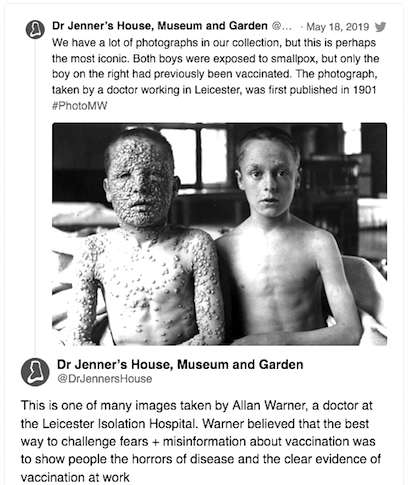
Though the compulsory nature of this UK scheme was not universally popular, it worked, as this 1901 photo of twin brothers in the Leicester Isolation Hospital demonstrates.

Two brothers, one with smallpox and the other, vaccinated, without.

One of the boys had been inoculated, the other had not. That picture should make us all grateful that by 1953 Smallpox was eradicated from the UK.

Born in 1943, I was vaccinated against Smallpox as an infant and I think I had a booster shot in my early teens. I had no say in the matter, but am grateful it was done to me and my generation. I do not feel my “freedom” or that of my contemporaries had been abused. My career as an adult does not indicate a submissive relationship with the Establishment. I only wish I could have been inoculated against Rubella (‘German Measles’) which laid me low for a while as an 18 year old in 1961 at the start of my life living “against the grain”.

A global campaign against Smallpox (mainly aimed at the ‘Third World’) was instigated by the World Health Organization in 1967. This led to the eradication of the disease from the face of the Earth in 1977. The World Health Assembly confirmed that outcome in 1980.

I do not know to what extent the countries involved in the WHO-led campaign imposed compulsory vaccination against Smallpox, but who will deny that liberating Mankind from that awful scourge was a boon? Who will insist that we should all have the “freedom” to contract, and to pass on, Smallpox — or any and every other kind of potentially lethal, disfiguring, disgusting, life-wrecking and preventable malady?

Examples of misinformation about the Coronavirus

But there are individuals and groups out there who demand just such a “freedom” and who produce material in the form of web site postings and YouTube videos which not only advance their point of view (which is their perfect right), but to publish deliberate lies and falsification of ‘evidence’ to advance their case.

Recently I have challenged two of the more blatant examples of this, as follows:

Example 1:

An e-mail with attachments, I think originating in the USA, which deployed a cut-and-paste partial use of the heading of a UK government/Public Health England web site posting. The text accompanying this heading forgery (which did not include the URL of the government web site!) claimed that the UK government had announced that it no longer categorised Covid-19 as a dangerous disease.

Eventually I persuaded one of those who forwarded the e-mail to me to supply the URL of the UK government web site involved. When I went to the site it soon became clear that those who had issued the e-mail had selectively copied elements of the heading and that the text of the notification underneath had likewise been ‘edited’ to misrepresent its message.

The original and complete web site posting simply re-allocated the status of Covid-19 from the “High Consequence Infectious Diseases (HCID)” category (which includes Ebola virus, Lassa fever, Pneumonic plague, along with 13 other deadly and highly infectious diseases) to a lower category of infectious and potentially lethal diseases.

The posting did not suggest that Covid-19 does not constitute a potentially lethal risk to persons who contract it. It merely indicates that it is not in the same league of deadliness and infectiousness as Ebola virus, Lassa fever, Pneumonic plague, etc.

Example 2:

A clearly American video posted on YouTube, showed a man in his late 30s/early 40s dressed (for no obvious reason) in hospital operating-theatre attire: gown, and face mask. This rig-out was designed to suggest he was a medical doctor.

The man’s name was not given either by himself, or in a voiceover, or in a caption. Likewise his medical qualifications were not given. The institution from which he was speaking — by implication a hospital — was not named.

He was speaking to his hand-held mobile phone. He appeared to be in a medical equipment storage room. He gestured to the equipment behind him and suggested that this was proof that there is no shortage of ventilators. Viewed briefly from a distance it was impossible for the layman to tell if the machines were indeed ventilators or commonplace mobile ‘vital signs’ monitors.

The ultimate target of the man’s diatribe was vaccinations — not just compulsory vaccinations, but any kind of vaccination for any kind of illness.

The man’s head was shaven bald. Minus his mask and with a few weeks’ hair growth he would be unrecognisable. He is a phantom who will disappear back into the mist from whence he came.

Conclusion

Let us by all means continue to observe and investigate the possible abuses of vaccination programmes for any signs of ulterior motives at work.

But we must protect our movement from being hijacked by anti-vaccination obsessives who are only interested in promoting their own peculiar agenda, and who are prepared to falsify evidence in support of it.

On all the issues which confront us, let us seek, find and publish authentic evidence without inventing any phony conspiracies — that would only serve to discredit our otherwise valid findings and our mission to save independent nationhood, civilization and the White race.

The BBC and the Covid Pandemic

We all know that the main debate over Covid 19 was whether the Government’s draconian lockdown measures were overkill, or whether they were justified in order to restrict the spread of a killer virus. So which side would the BBC endorse? The answer’s simple: The side that required restrictive measures to be imposed, that would do maximum economic damage to the country, and would cause the highest possible measure of public alarm, so procuring a largely misinformed, frightened and compliant population.

If the BBC were really impartial then it would have refrained from supporting either side, instead opting for as much full and open debate as possible. It would have given air time to expert scientists and doctors from both sides of the argument, in order to try to arrive at the truth.

Leading scientists cancelled

But truth and the BBC are uneasy companions, as we at Anglo-Celtic know only too well. The BBC management oversaw a totally one-sided discussion of the issue. They refused air time to several eminent scientists who, before Covid, had frequently been sought out for their opinions. One such was Professor Carl Heneghan, professor of evidence-based medicine at Oxford University. He was often interviewed on BBC radio and television in the early days of the pandemic. But as soon as he began questioning government policy he was blocked. He says, “For the whole of 2021 I was virtually ghosted by the BBC. I was sometimes booked to go on programmes but then it would be cancelled or I would be told I wasn’t needed”.

People with no medical qualifications but who supported the Government’s stance on Covid 19 and the lockdowns, however, were given plenty of air time. One example is Devi Sridhar, Professor of Public Health at the University of Edinburgh,counter-disinformation policy forum. It was she who, when the Pfizer vaccine was approved for use in children aged 12 to 15 in June 2021, told the children’s current affairs programme, Newsround, that the vaccine was “100 per cent safe for children”. Some journalists who were aware that no medical expert would ever claim that a vaccine is 100 per cent safe, raised the alarm with their managers. It turned out that Sridhar is not a virologist, immunologist, or expert on vaccination, and so is not qualified at all to pronounce on the safety or otherwise of any vaccine.

Toeing the line

It’s evident that during the Covid 19 lockdowns, the BBC reduced itself to being a mouthpiece for the Government. It even instructed its reporters not to use the word “lockdown”. Instead, they were to talk about curbs and restrictions. This was in line with Government policy.

Even worse, the BBC sent a representative to meetings of the “Counter-Disinformation Policy Forum”, set up by the Government to stifle dissent on the methods used to counter Covid 19. Jessica Cecil, founder of their “Trusted News Initiative” (set up in 2019, ostensibly to uncover “fake news” and warn media partners of such) was seconded to attend its meetings. No unredacted minutes of its meetings have ever been published.

The “Counter-Disinformation Policy Forum” (December 2020-June 2021) was chaired alternately by a Minister of State and a senior Civil Servant. It is not to be confused with the equally secretive “Counter Disinformation Unit”, also set up by the Government at about the same time. It’s clear that the attitude of these government bodies towards anyone who questioned the myths surrounding Covid and the lockdowns was hostile in the extreme. For example, they openly referred to their mission to “address the serious risk of harm posed by….anti-vaccination mis/disinformation”. Just look it up on any search engine.

The BBC partakes in a “conspiracy against public debate”

Robin Aitken, a former BBC journalist, has described it as “alarming” to discover that the BBC took part in this “forum”, and suggested it was a “conspiracy against public debate”. He went on to say that the BBC’s action shows that “when it chooses to, it toes the line and does the job the Government wants it to do.” And the job the Government wanted it to do was to argue the case that any information indicating that vaccines were anything other than totally safe and effective was untrue.

We’ve heard more and more lately about “disinformation” and “misinformation” from the mass media, led by the BBC. Robin Aitken sums this up perfectly by saying, “This whole idea of disinformation is a method of enforcing an orthodoxy on the public debate”. In other words, to stifle freedom of speech and expression (in defiance of its 2016 Charter).

The BBC implements a “climate of fear”

It’s just an excuse for blatant censorship. The BBC also implemented what current and former BBC journalists have called a “climate of fear”. Any journalist or manager who questioned this tyranny was “openly mocked”. And as for reporting on anti-lockdown marches then taking place in London, some of which attracted many thousands of protesters, they were “not on the agenda”. That’s “Cancel Culture” for you. Yet if any of this was put to senior management at the BBC, as it often was by a minority of more independent thinking journalists, they simply denied it. No explanation. No point-by-point refutation. Just denial. This sounds familiar to us at Anglo-Celtic. It’s what we had to contend with when we filed a 93-point series of complaints with the BBC and, later, with Ofcom, all backed up with documentary evidence. No attempt to answer even one of our complaints. Just denial.

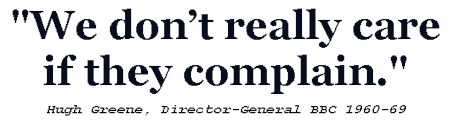
"We don't really care if they complain." - Hugh Greene, Director-General BBC 1960-69.

Yet it gets more sinister. Anna Brees was a BBC news presenter who left the Corporation before the Covid pandemic. She was contacted by a like-minded BBC senior editor when she tweeted her opinions about the lockdowns. The editor emailed her with an assurance that he supported her in her concerns, and asked her to let him have the names of any other people in the BBC News department who shared “their” views. But if this was a genuine attempt to resist the tyranny at the BBC then it failed because of the fear that it may be a trap to identify dissenters, who would then be open to losing their jobs, and possibly their careers as well.

Ofcom as well

It wasn’t just the BBC. It was Ofcom as well. Ofcom, as well as the BBC, had a seat on the secretive “Counter Disinformation Policy Forum”, and on the day the first lockdown was announced by the then Prime Minister Boris Johnson it issued “guidance” (i.e. a diktat) on “broadcast standards during the coronavirus pandemic”. If this was designed to coerce any remaining independently minded journalists into toeing the line then it succeeded. The “climate of fear” was fully implemented. Proper national debate on the virus, the lockdowns, and public policy changes to accommodate them, was stifled.

The BBC failed totally in its duty to provide clear and independent coverage of the Covid-19 pandemic, the lockdowns, and the effect of all this on public health, the economy, and the nation as a whole.

It’s high time this corrupt, treacherous organisation was abolished. Find out more about our Campaign to Abolish the BBC by clicking here.

The BBC and the rewriting of history

The re-writing of history is another sinister development that has been growing in recent years. This is not limited to the BBC, of course, but naturally it is in the vanguard. The main focal point of this is to make the British people ashamed of being White and instil in them a huge guilt complex. Then, so the liberal elite believe, White British people will be ready to commit racial suicide en masse and very quickly on the alter of “diversity” and “inclusivity”.

Dramas

Historical dramas, which even recently the BBC were renowned for in terms of historical accuracy and authenticity, are now a joke. For example, the forthcoming series of ‘Wolf Hall’, about the relationship between King Henry VIII and his senior minister, Thomas Cromwell, would have us believe that many courtiers in the Royal Court were black. As anyone even vaguely familiar with that period of English history knows, the number of black people in the whole of Britain at that time could probably have been counted on the fingers of one hand.

History

Broadcasts that are supposed to present true history (as opposed to historical drama) are now little more than diatribes of leftist hate against White people in general and Britain in particular. Any evidence that doesn’t fit in with the left’s narrative is simply ignored.

We’ve seen this in the infamous BBC Radio broadcasts of 2020-21, ‘The Battle of Lewisham’ (in the ‘Witness to History’ series, where just one person gives their views on a historical event), and the three-part ‘Britain’s Fascist Thread’. A major feature of these programmes was the National Front march through Lewisham that took place on August 13th 1977. See https://www.bbc.co.uk/programmes/m000skcb.

Dozens of witnesses were interviewed and allowed to give their own particular distorted accounts of what happened that day. All of them without exception were left wing or extreme left wing. No-one from the National Front was interviewed – not even the National Activities Organiser, Martin Webster, who organised the whole event.

Ninety Three Lies and Distortions – in just three broadcasts

No less than ninety three cases of lies, distortions, and bias in those broadcasts were complained about by us at Anglo-Celtic. The BBC Executive Complaints Unit and, later, Ofcom, refused to investigate any of them.

The next step, if we had the funds, would be to apply for a court order that would force the BBC to consider our complaints properly, as required by their Charter. The BBC is cynically relying on our inability to come up with the thousands of pounds that such an action would cost.

"We don't really care if they complain." - Hugh Greene, Director-General BBC 1960-69.

The BBC’s Complaints System is a Fraud

There’s one very interesting aspect about complaining to the BBC that everyone should know about. The Corporation elevates itself to such a high status that it feels completely justified in imposing strict limits on the number of words any given complaint can contain. There are also strict time limits within which complaints have to be lodged. Making a complaint is treated as a concession and not a right.

What other organisation, public or private, purports to impose such restrictions on the public’s right to complain about it? This is all the more pertinent when the people making the complaints are invariably licence fee payers who collectively fund the BBC. The audacity of the BBC in imposing rules about how people can complain about it, the maximum length of written complaints, and the time limits within which such complaints must be received, is staggering.

At last a backlash is occurring. More and more people are refusing to pay the BBC’s exorbitant licence fee. So much so that the BBC is now facing a serious shortage of money. It is even having to reduce expenditure on the salaries of overpaid presenters, such as the infamous left wing soccer pundit, Gary Lineker, and their pension contributions.

Let’s hope the licence fee crisis blossoms into a full scale collapse of this rotten, corrupt and parasitic institution so that its outpouring of marxist poison day after day can be throttled once and for all.

Join our Campaign to Abolish the BBC by clicking here.

THE CONSENSUS IS GROWING – THE BBC IS NO LONGER FIT FOR PURPOSE

It should be obvious to anyone who reads this blog that the BBC is heavily biased in favour of everything that is destructive of our values, our culture, our nation and our race. Not only that, but that it has been so biased since at least the early 1960s, when the obnoxious Hugh Greene was appointed as Director-General.

"We don't really care if they complain." - Hugh Greene, Director-General BBC 1960-69.

Greene was reputed to have said in private, at the time of his appointment, “We are going to use this organisation to change the way the rest of the country thinks. We want them to see stuff they don’t like. We don’t really care if they complain” (italics added). See https://en.wikipedia.org/wiki/Hugh_Greene. It was he who made the presumptuous statement in 1968 that “we are all Marxists now”.

To understand what has been going on, we must remember that, like all national institutions that have been captured by the Left, the BBC has to continually engage in a policy of deception, so that its nefarious activities can remain hidden from the public.

What they tell us….

For example, the BBC regularly assures everyone that it maintains the highest standards of impartial news reporting and analysis. It tells us that its drama and other entertainment programmes reflect life in modern Britain. It would have us believe that its treatment of contemporary history is objective and untainted by any bias for or against any particular point of view or political affiliation. And they protest that in matters that are controversial, all sides are represented in debates, discussions, and interviews.

If any listener or viewer feels that any programme or presenter has contravened this high standard then a complaints procedure is in place, including the right of appeal. Now we have Ofcom too, as an extra layer of protection, supposedly.

The BBC’s 2016 Charter commits the Corporation to “provide duly accurate and impartial news, current affairs and factual programming to build people’s understanding of all parts of the United Kingdom and of the wider world”. The same Charter also commits the Corporation to “championing freedom of expression” (ha,ha).

… and what they do

The reality is quite different. The BBC routinely ignores its Charter. Whilst hiding behind a veneer of respectability, the Corporation spews out heavily biased news and views, the re-writing of history, woke poison, and misinformation designed to confuse its viewers and listeners, especially vulnerable young people.

Even establishment figures are seeing through it all

Lately there’s been a development that would have been unthinkable just a few years ago. Some establishment politicians and former BBC employees are accusing the Corporation of being heavily biased in favour of allowing a never-ending stream of foreign migrants into Britain.

That such a policy is turning into a disastrous large-scale catastrophe for Britain hardly needs saying here. People like us have been saying that since at least the 1960s. Recent migrant riots in France, where cities like Paris have had large areas reduced to smoking rubble, and anarchy reigns, only underline the insanity of “open door” immigration policies.

Now we have Sir Iain Duncan Smith, the former Conservative Party leader, saying that the BBC’s ingrained political bias has led to an “instinctive cultural sneer” when covering news about immigration. According to him, the BBC is now a branch of the “liberal Left”, completely out of tune with the public that it is supposed to serve. For such a long-standing and senior member of the Conservative Party to say that, things must be extremely bad.

An “institutional liberal bias”

And who would have imagined, even just a few years ago, that John Humphrys, the leading BBC newsreader and presenter of the odious Today Programme for many years, would now be accusing his former employers of having an “institutional liberal bias” and, again, of being out of touch with public opinion. Needless to say, he made these sack-worthy accusations on his retirement from the BBC.

Helen Boaden worked for the BBC for over 30 years as a news director at BBC Radio and BBC News, and Controller of BBC 7 and BBC Radio 4. She said as far back as 2013 that the BBC had a “deep liberal bias”, and did not take seriously the views of organisations that were opposed to mass migration into Britain (such as Migration Watch).

A glance at our Campaign to Abolish the BBC will show that the corporation

1. has abandoned all pretence at being impartial,

2. is engaged in a serious and sustained attempt to rewrite history from an extreme left wing viewpoint, and

3. has a so-called complaints procedure that is nothing but a sick joke.

In view of all this, we at Anglo-Celtic are running a series of posts, of which this is the first, to enlarge on what we say in our Campaign to Abolish the BBC.

Humbug, Hypocrisy, and the Dismantling of White Western Identity

Reproduced here by permission of The Occidental Observer and Professor Kevin MacDonald – a wide-ranging article covering several subjects, including the Peter Simple column that used to grace the pages of the Daily Telegraph most of the time from the 1950s to the end of the twentieth century. In particular it informs us about hogwash from the UK’s Jewish Board of Deputies, the murder of the Dutch-born poet Jacob Israel de Haan (an anti-Zionist), and Jewish hypocrisy in demanding the right to exclusivity for Israel and Jews living in gentile nations but “diversity” for everyone else.

None of my best friends are Jewish, but two of my favourite authors are. One of those favourite writers is Larry Auster (1949-2013) from New York, who wrote some of the best and clearest analysis of liberalism and the American immigration disaster. Although he often criticized Jews for their central role in both, he also condemned Kevin MacDonald’s ideas as extremist and unacceptable. At the end of his life, however, he pretty much admitted that MacDonald was right.

“Read off the result in prejudons”

The other of those favourite writers of mine is Michael Nathan (1913-2006) from the Yorkshire town of Bradford, who wrote the satirical and whimsical ‘Peter Simple’ column in the Daily Telegraph for many years. As he himself often acknowledged, his work owed much to the surreal genius of the Catholic Beachcomber, but he had his own gift for capturing the absurdities of leftism in memorable characters and imagery. One of Simple’s greatest satirical inventions was first unveiled as early as the 1970s and was used regularly until his death in 2006:

THE Macpherson Report’s definition of a ‘racist incident’ as ‘any incident perceived to be racist by the victim or any other person’ is causing immense trouble and confusion for all concerned. Yet there is a simple answer. As I have pointed out before, the Racial Prejudometer was originally developed by the West Midland firm of Ethnicaids for use by the race relations industry, but is now available to everybody (ask your nearest race relations stockist).

Inexpensive and handy for pocket or handbag, you simply point it at any person (including yourself) you suspect of ‘racism’, press the easy-to-find ‘action’ button and read off the result in prejudons, the internationally recognised scientific unit of racial prejudice. (The Peter Simple Column, The Daily Telegraph, 13th April 2001).

It takes a truly gifted writer to say so much in so few words: Simple was satirizing ‘the race relations industry’ (a phrase he also invented), the uncritical adulation of science, the leftist pretence that racism and ‘hate’ can be objectively defined and measured, and more besides. But note particularly the phrase ‘internationally recognised,’ which Simple knew to be a sure sign of leftist cant and humbug. Nonsense remains nonsense, no matter how widely it is ‘recognised.’

Adopt the definition, already!

Peter Simple first pointed that out decades ago, but his satire has never gone out of date. In the 21st century, nonsense is still being promoted on the ground that it is ‘internationally recognised.’ Simple must have chuckled to himself in Satirists’ Heaven when he read this self-important and self-righteous announcement from the Jewish Board of Deputies:

Board of Deputies applauds King’s College London for adopting internationally recognised definition of antisemitism

Board of Deputies President Elect Marie van der Zyl has applauded King’s College London for adopting the internationally recognised IHRA [International Holocaust Remembrance Alliance] definition of antisemitism.

Marie said: ‘This is the right move by King’s College London. Together with our Jewish communal colleagues we have been in an ongoing dialogue with Professor Byrne to address some of the issues facing Jewish students at his and other London universities. We are pleased that the university has joined the many bodies that have already adopted the definition, including the UK Government, the Scottish and Welsh Governments, the National Union of Students, and hundreds of local councils.

‘The IHRA Definition makes it easier for authorities to identify and understand the nature of contemporary antisemitism. If universities are serious about addressing antisemitism and making Jews feel welcome at their institution, they should follow KCL’s example and adopt the definition.’ (Board of Deputies applauds King’s College London for adopting internationally recognised definition of antisemitism, The Board of Deputies website, 30th May 2018)

The phrase ‘internationally recognised’ is still a sure sign of cant and humbug. And sure enough, the IHRA’s definition of ‘anti-Semitism’ is ludicrously vague and elastic:

Antisemitism is a certain perception of Jews, which may be expressed as hatred toward Jews. Rhetorical and physical manifestations of antisemitism are directed toward Jewish or non-Jewish individuals and/or their property, toward Jewish community institutions and religious facilities. (What is Antisemitism?, The Campaign Against Antisemitism)

The definition is plainly designed to end free speech about Jewish misbehaviour and to prevent any challenge to Jewish power. It’s accompanied by a list of examples of anti-Semitism in action. Here is one of the examples:

Accusing Jewish citizens of being more loyal to Israel, or to the alleged priorities of Jews worldwide, than to the interests of their own nations. (What is Antisemitism?)

Well, if that is an example of anti-Semitism, it’s clear that Jews themselves are often highly anti-Semitic. For example, here are two posters that recently appeared in New York and London to celebrate a happy event in ultra-Orthodox Jewish life:

One Nation in New York: Agudath Israel celebrates a Talmudic milestone at the MetLife stadium
One Nation in London: Agudath Israel celebrates a Talmudic milestone at Wembley Arena

Note the slogan ‘One Nation. One Siyum.’ A siyum is a complete communal reading of the Talmud, the strange, anti-Christian and anti-gentile scripture that is now central to Judaism (and that makes Judaism, in effect, younger than Christianity – the Talmud was composed in Palestine and Babylonia centuries after the death of Christ).

Murder of a poet

But what is the ‘One Nation’ that has just completed ‘One Siyum’? Plainly, the nation can’t be the United States or the United Kingdom. Those are two separate countries whose inhabitants have mostly never even heard of the Talmud. And the same slogan is being used in both New York and London. No, ‘One Nation’ obviously refers to ultra-Orthodox Jews living on opposite sides of the Atlantic. They don’t regard themselves as American or British, but as Jewish in both race and religion. The organization behind the Siyum celebrations, in which tens of thousands of ultra-Orthodox Jews packed stadiums in New York and London, is called Agudath Israel, which means ‘Union of Israel,’ that is, union of the geographically dispersed Jewish people, wherever they happen to be in the world. Agudath Israel was founded in 1912, long before the founding of the physical state of Israel in 1948. At first the organization opposed Zionist attempts to create a literal homeland for the Jewish people, believing that Jews should wait for ‘divine intervention.’

Indeed, its opposition was too effective for the liking of some Zionists. In 1924 the militant and often murderous Zionist organization Haganah (the forerunner of the Israel Defense Forces or IDF) assassinated one of Agudath Israel’s most eloquent spokesman, the Dutch-born poet Jacob Israel de Haan. Since then Agudath Israel has become ‘non-Zionist, rather than anti-Zionist,’ and it has actually spawned an ultra-Orthodox political party in Israel called Agudat Yisrael. The party is small, never winning more than a handful of seats, but Israel’s system of proportional representation has allowed it to tip the balance of power and wield far greater influence than any equivalent parties in America or Britain.

A Jewish supremacist party

And equivalent parties in America or Britain would inevitably be called ‘far right’ and condemned with labels like ‘racist,’ ‘sexist,’ ‘homophobic,’ and ‘extremist.’ Agudat Yisrael would accept all those labels with pride: it is a Jewish supremacist party upholding traditional Jewish values. It does not believe in welcoming non-Jewish refugees into Israel, permitting women to pursue careers outside the home, or celebrating homosexuals and their fascinating microbiological experiments. Agudat Yisrael and similar parties also represent Israel’s political future, thanks to much higher birth-rates among strongly religious Jews than among secular and liberal Jews.

The same discrepancy in birth-rates exists among Jews in America and Britain. That’s why Agudath Israel was able to fill stadiums in two major Western cities with enthusiastic young Talmudic scholars. And although it used a blatantly anti-Semitic slogan to promote its Siyum celebration, it didn’t need to worry about being prosecuted for hate. Plainly Agudath Israel is far ‘more loyal to the priorities of Jews worldwide’ than to the nations of America and Britain. Indeed, it isn’t loyal to America or Britain at all. But Agudath Israel is a Jewish organization and Jews can state the truth about Jewish behaviour when it suits them. Goys can’t state the truth or they will be expelled from respectable society.

Inbreeding and ethnocentrism

And why should Agudath Israel be loyal to America or Britain? Its ideology is far more realistic and historically grounded than the race-blind universalism that currently governs the political and cultural mainstream in Western countries. I say ‘countries’ advisedly, because they’re not true nations any more. But when Agudath Israel refers to ultra-Orthodox Ashkenazi Jews as ‘One Nation,’ it’s using the word with perfect accuracy. ‘Nation‘ ultimately derives from the Latin verb nasci, meaning ‘to be born.’ Ultra-Orthodox Ashkenazim, whether they live in New York or London, are bonded by blood, language and religion, and therefore form a true nation. Indeed, Ashkenazim are highly inbred by gentile standards and seem to have gone through a genetic bottleneck of around 350 ancestors sometime during the Middle Ages.

This inbreeding has undoubtedly contributed to the ethnocentrism of Ashkenazi Jews, who are bitterly accused of racism and prejudice by Mizrahic and Ethiopian Jews in Israel. But Ashkenazi Jews have cleverly projected their own ethnocentrism and ethnic nepotism onto White gentiles as part of the culture of critique. For example, in Britain the Equalities and Human Rights Commission (EHRC) is headed by two ethnocentric Jews: the lawyer Rebecca Hilsenrath and the homosexual-rights activist David Isaacs. Ms Hilsenrath has told the Jewish Chronicle that her well-paid role of hunting down White racism and xenophobia constitutes ‘the best job in the world.’

The Fine Line

The academic Sarah Fine is another Jewish woman who surely derives great satisfaction from her well-paid job attacking the White British. As the new decade began, the Jewish Chronicle was delighted with Fine’s answer to the vexed question of ‘Who decides who is British?’ It’s certainly not the White British, whose racism, xenophobia and ‘lazy assumptions’ make them entirely unfit for such important decisions. Instead, it’s Jews guided by the sacred Jewish value of ‘Welcoming the Stranger’:

Jewniversity: Sarah Fine

Who decides who is British? In the latest in David Edmonds’ series on Jewish academics he meets an academic whose focus is national identity

I usually ask the subjects of this column – ‘is there any link between your academic area and your ethnicity and cultural background?’. ‘No’, is the occasional curt response.

But Sarah Fine’s work focuses on issues of national identity, discrimination, immigration and minority rights. So, in her case, the connection with her Jewish upbringing is obvious.

Almost everyone reading this column will have parents, grandparents or great grandparents who arrived in this country from elsewhere. Had they not moved country, you, dear reader, would not exist. But would it have been within Britain’s right to deny your ancestors entry? Would it have been acceptable to turn grandfather Sholem away?

To most people, that might seem a silly question. The Brexit vote revealed how strongly many Brits feel about this. Of course, a state should be allowed to set immigration controls, to determine the criteria for entry, to police borders. That’s a fundamental right of every state. Surely?

Dr Fine, who teaches at King’s College London, wants to interrogate this lazy assumption.

On what grounds does the state claim this exclusionary right? Various arguments are offered. One is that the state has the right to defend itself – indeed, providing security is the state’s most basic function. Well, fair enough. That might give it a reason to exclude outsiders who are convicted murderers or ISIS fighters. But grandfather Sholem posed no danger to individuals or to the state.

But the state has always claimed the right to control its borders – doesn’t that, in and of itself, demonstrate its exclusionary right? Not really. Some states in the past (and a few still today) claimed the right to deny exit (think of the USSR) – can we really be confident that the denial of entry is morally superior to the denial of exit?

But we live in a democracy, and surely in a democracy the people get to decide on the rules: and the majority of people don’t want uncontrolled immigration. Well, what is a democracy and who are the people? Presumably, a democracy is a form of government in which autonomous agents like you and me get a say in laws that shape our lives. In the early 20th century, it was impossible to resist the argument that women should have the vote because women were affected by laws passed by parliament. But, in that case, is it so obvious that the voice of grandfather Sholem should be ignored? Whether he was granted entry to Britain was hugely important to him.

Here’s another argument. Should we not regard the state as just like a larger version of a golf club? And don’t we think that it’s fine for a golf club to exclude members? Up to a point. Many golf clubs excluded Jews until around the 1960s, and that doesn’t seem totally OK. In any case, states are not voluntary associations, and the stakes are far higher.

Let’s try a final tack. We need to control our borders to protect our culture, our way of life. Yet even if we grant there’s something in this, we should tread carefully. What is ‘our’ way of life? Is the British way of life Christian? Can it include the way of life of minorities? Is it immutable, or can it evolve? And is protecting a way of life so important that it trumps grandfather Sholem’s desire to move here?

Sarah Fine has distant roots in Poland and Lithuania, but three of her grandparents were born in the north of England. Her parents both grew up in the tight-knit Jewish community in Sunderland. Most Sunderland Jews departed by the 1970s, and Dr Fine’s parents – the first in the family to attend university – settled in North London. It was a religious home, with a kosher kitchen. She attended the Sinai Jewish Primary School in Kenton.

She found aspects of religion difficult to reconcile with other beliefs and now describes herself as culturally Jewish rather than religious – but she wants to pass on some Jewish learning to her kids. As for her academic work, Sarah Fine says it’s partially inspired by a Torah portion she read during a women’s service when she was a teenager: ‘And you shall not oppress the stranger, for you know the soul of the strangers, for you were strangers in the land of Egypt’. (Who decides who is British?, The Jewish Chronicle, 3rd January 2020 / 6th Tevel 5780)

There you go: it’s grandfather Sholem and his descendants who get to decide who is British – and who is American, German, French, Swedish, Australian and so on. Grandfather Sholem might have been a highly superstitious and goyophobic Yiddish-speaker in Eastern Europe with no connections to any Western nation, but his ‘vote’ outweighed any vote cast by the White citizens of any Christian nation to which he wished to emigrate. After all, ‘[w]hether he was granted entry’ was hugely important to him.’

And welcoming the stranger is, according to Sarah Fine, a core Jewish value drawn from the Torah, or Jewish Bible. It isn’t, of course, because Israel trashes the Torah by sealing its borders with high-tech fences and refusing to accept any of the non-Jewish refugees that abound in the Middle East. Israel has very strict laws on citizenship, which deny citizenship to Arabs expelled during the formation of Israel, although their ancestors had lived in that region for millennia. No, Israel is a Jewish nation and Jews are determined it will remain that way. Britain was a White Christian nation and Jews were equally determined that it should not remain that way.

The core of mendacity

Meanwhile, Jews in America, Germany, France, Sweden and Australia were busy dismantling the national identity of millions of other goyim. The anti-White lies and propaganda began early in America, which Jews proclaimed to be a ‘nation of immigrants’ and a ‘melting pot‘ for all creeds and colors. The same lies and propaganda arrived much later in Ireland, but are now doing sterling work in dismantling Irish identity and justifying mass immigration from the Third World. As we saw above, Britain has the Equalities and Human Rights Commission (EHRC) to enforce Jewish ideology. Ireland has an organization with a nearly identical name: the Irish Human Rights and Equality Commission (IHREC). There are no obvious Jews among its commissars, but there are plenty of lawyers and also two Black Congolese diversicrats: Fidele Mutwarasibo, who has ‘a PhD in Sociology,’ and Salome Mbugua, who has ‘a Master’s degree in Equality Studies.’ And so Jewish ideology is certainly at work in the IHREC. That’s why it is busy issuing ludicrous propaganda posters like this:

The poster, which features the Black IHREC commissar Salome Mbugua, makes an utterly ludicrous claim: ‘Diversity is at the core of what it means to be Irish.’ You might as well say that ‘Disunity is at the core of what it means to be united’ or ‘Blackness is at the core of what it means to be White.’ And that is what the anti-Irish IHREC are saying: that anyone of any race from anywhere on Earth can be Irish. If that were true, being Irish would have no meaning except residence on Irish soil. It isn’t true, however. It’s a lie derived from the anti-White Jewish ideology of universalism, which seeks to dissolve all White bonds of identity and swamp White nations in a tide of non-White immigration from the corrupt, tribalist and highly illiberal Third World.

Unity for Jews, atomization for Whites

Jewish ideology has a simple underlying message: ‘Jews can, goys can’t.’ Jews like Agudath Israel – meaning ‘Union of Israel,’ remember – can celebrate Jewish unity and nationhood across vast geographic boundaries. Goys like the White Irish cannot form a nation of their own even within the shores of their isolated north Atlantic island, where the genetic, cultural and linguistic roots of Irishness go deep into prehistory.

Our Man in the Dáil: Jewish nation-dissolver Alan Shatter

And guess who opened the immigration floodgates in Ireland both for Black shysters like Fidele Mutwarasibo and for Black criminals and welfare-eaters. It was the aptly named Jewish minister Alan Shatter, who was hailed by the Jewish Chronicle as ‘Our Man in the Dail’ (Irish government). Back across the Irish Sea, the Jewish minister Barbara Roche opened the immigration floodgates under the traitorous Tony Blair. The patterns of anti-White Jewish behaviour are very obvious, but the IHRA’s ‘definition of anti-Semitism’ is designed to make them impossible to describe and analyse. Jews can have a nation of their own, goys can’t. What could be simpler than that?

RSS
Follow by Email